SURFing with Grupo SURF

Published on 26 July 2010 by bahiaaventuras in Uvita

0

SURF volunteer Emily Ausubel gives us her perspective on working with Grupo SURF 2010 in her article titled “SURFing in Costa Rica.”

Continue Reading

0

Bahia-Uvita Youth Program “Grupo SURF”

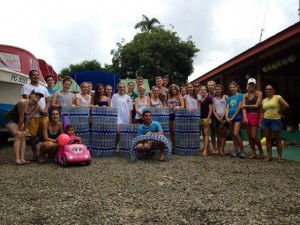
SURF is a community-based organization that empowers youth as integral agents of change in the sustainable development of their communities. SURF is founded on the belief that youth are a fundamental resource in promoting responsible community development and creating a healthy future for themselves and their communities.
In Bahia Ballena, Osa, Costa Rica, SURF provides youth the opportunity to participate in capacity-building programs that enhance their quality of life, help them gain employment options and improve their decision-making processes.

Youth and Conservation

Costa Rica covers less than 1% of the earth’s surface area but contains 5% of the world’s biodiversity. It has 26% of its 52,100 km2 of land under protection, but less than 1% of  its 580,000 km2 of marine territory under protection.
SURF’s program operates in Bahia Ballena, Osa, a region that includes 149,808 hectares of protected areas including three national parks, two reserves a wildlife refuge and a marine national park.  The Osa area contains an incredibly diverse set of ecosystems that are currently being threatened by unregulated tourism, pollution, illegal extraction of floral and fauna and commercial and real estate development.

Bahia-Uvita and the Marino Ballena National Park

The community of Bahia Ballena is located at the footsteps of Marino Ballena National Park, Costa Rica’s first Marine National Park, which was established in 1989.  The park is the main tourist attraction in the area and plays a key role in the community’s socioeconomic development.  Conservation efforts in the Marino Ballena National Park and the greater Osa region can be improved by empowering youth as integral agents of change in the sustainable development of their communities.

SURFs Methodology

SURF is based on the education methodology: Tell me, I’ll forget; Show me and I may remember; Engage me and I’ll understand.   Students participate in hands-on activities around their neighborhood through which they gain a deeper understanding of their community, its needs and the steps they can take to bring about institutional change.  SURF participants learn GIS and GPS mapping techniques so that they can create comprehensive maps of the greater Bahia Ballena region.  They go on excursions into the Marino Ballena National Park and coastal mountains to learn about relevant topics such as whale migration and the origin of their town’s potable water.
SURF’s curriculum is divided into four modules called “The Four Waves” that encompass six months of weekly sessions.  Each wave contains trainings, workshops and extra-curricular activities that engage students with their community and marine protected area.  As students progress through the Four Waves, they participate in activities that encourage self-awareness by connecting them to their community, environment and peers.  After gaining a sense of belonging in their community, students learn the skills of a responsible leader and master the techniques for project design and management.  The group then employs the knowledge they have acquired to develop and implement independent, sustainable community projects. The group culminates its SURF experience by learning that generosity is rooted in one’s intention to care for the common good of a community. After graduating, youth participants become SURF mentors for future SURF generations, ensuring the sustainability of the program and living the knowledge and skills developed throughout their participation in the Four Waves.

Strategic Alliances

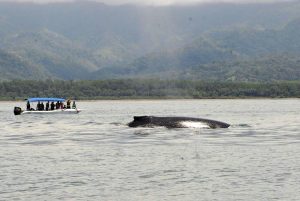
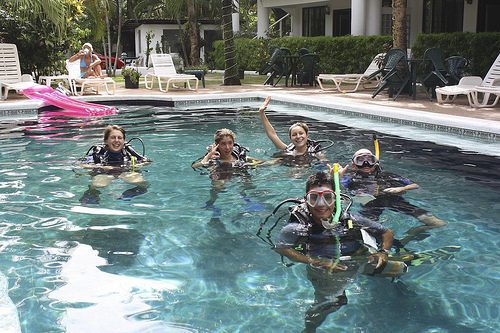
The KETO Foundation is a “non-profit organization focused on the study of biology, management and conservation of marine and coastal resources.” KETO uses its research on marine ecosystems in Osa to teach SURF youth the importance of aquatic management and conservation. The KETO – University of DUKE – SURF partnership empowers youth through marine education and interactive excursions such as snorkeling, whale watching and beach clean-ups, providing youth the opportunity to engage and build a relationship with their Marine Protected Areas (MPAs).
Bahia Aventuras
Bahia Aventuras is a boat and nature tour operator in the national parks and reserves located in the Uvita-Bahia Ballena area.  SURF partners with Bahia Aventuras to augment students’ experiences studying the marine life in their community with boat tours and other excursions into the protected areas.
Bodhi Surf School in Bahia Ballena utilizes the incredible resource of Marino Ballena National Park to provide a unique surfing experience focused on a mind-body-earth awareness. Bodhi Surf provides lessons for SURF participants, introducing them to the national park and helping them build ocean awareness and confidence in themselves.
Outside The Lens (OTL) is a San Diego-based organization that works to “engage, educate and empower youth on issues affecting the world today” by promoting youth literacy through the arts.  SURF has partnered with OTL to bring dynamic photography and multimedia projects into the SURF curriculum that encourage students to reflect on the role they play in their community.
La Cusinga is a “coastal rainforest eco lodge dedicated to marine and terrestrial conservation and environmental education.” Located in Bahia Ballena, Osa, the lodge has obtained four out of five leaves marking certified sustainable tourism. La Cusinga maintains private trails to primary rainforest through which they lead SURF students on educational walks. Staff also teach SURF students about sustainable hotel operations.
GISETC has spent the last ten years providing workshops, software and curricula for both educators and students.  GISETC provides SURF students with GPS hand units and teaches the students how to use GIS and GPS mapping techniques as a tool to map their community’s resources.

Continue Reading

Uvita High School

Published on 26 July 2010 by bahiaaventuras in Uvita

0

Uvita High School installs fence to border property

Uvita High School is now better protected and equipped to protect its students do to a mesh fence that was constructed around the institutions perimeter.  The project was finalized with the support of the Uvita community, Osa’s Municipality and other institutions.  The Uvita High School and its students are also working on the construction of a park inside the high school.  The goal for Uvita high school is to finish the gym, which started in 2001 and has a floor and locker rooms.  Another goal is to have two or three more classrooms built as the amount of students is increasing constantly.

Adapted from South Pacific News

Continue Reading

0

School in Uvita-Bahia area is an example of sustainable architecture

Ballena school, located a few kilometers south of Uvita, is an example of sustainable architecture.  The school proves the benefits of practicing bio climatic architecture and serves as a sustainable development example for the Uvita and greater Osa region. The school uses a tropical bio climatic architecture that does not require air conditioning, containing large windows that permit natural airflow from the ocean breeze.  Not only does the school conserve energy, its design fits the natural beauty of the area.

Adapted from South Pacific News

Continue Reading

Uvita ASADA gets white flag

Published on 26 July 2010 by bahiaaventuras in Uvita

0

The public water facility ASADA gets White Flag

Uvita ASADA, which provides water for over 700 families (approximately 3000 people) in the area, was awarded the white flag from the Costa Rica water institution called Acueductos y Alcantarillados (AyA).  In order to receive the award, Uvita ASADA had to complete an analysis that required four visits by members of AyA in one year.  The Uvita ASADA also presented a full report about the conditions of the aqueduct, including streams, tanks, conduction lines, and their education and environment programs.  Uvita ASADA plans to continue improving their services and infrastructure to obtain the highest award of six stars.  In order to achieve six stars the Uvita ASADA should label tanks and install hydrants amongst other works.
Adapted from South Pacific News

History of the UVITA aqueduct

In 1985 the Uvita community started organizing itself to form a Rural Aqueduct Committee.  Several years later the need for increasing the size of the Rural Aqueduct became apparent and in 1996 the committee becomes an Aqueduct Administrative Association.  In 1999 the technical studies for the construction of a new aqueduct take into account the growth of Uvita and Bahia and a new aqueduct development project takes form.  After many years of hard work the Uvita aqueduct is officially inaugurated in 2006.  Since then the Uvita ASADA has worked diligently to protect the watersheds along the coastal mountains.

Continue Reading

Costa Rica’s Oceans

Published on 04 June 2010 by bahiaaventuras in Blog

0
Costa Rica is a small country that represents only .03% of total world land mass yet contains 5% of the worlds biodiversity.  It is a country that has more than 25% of it’s national territory under some form of protection yet the waters that border the country have been largely neglected with less than one percent being regulated under some form of protective category.
The marine ecosystems of the Osa Peninsula have been effected by this lack of protection and are critically threatened by a number of factors; overfishing, unplanned coastal development, population increase, coastal and marine pollution, severe lack of conservation awareness, viable economic activities, etc.
However, over the last two years the conversation about marine conservation has increased and government and non-government organizations are now talking in the same language.  This conversation is also happening in coastal communities that depend on the ocean for their livelihoods. New programs and small businesses focused on sustainable marine tourism, which in the past were scarce, are now becoming the norm.
Donations from aid agencies to help Costa Rica protect its Pacific waters have been made and Costa Rica Universities are working with government organizations on monitoring studies and marine ecosystem analysis.  Costa Rica pioneered the modern eco-tourism sector by taking smart steps in land conservation and now they have the opportunity to do the same with their oceans.  Once Costa Rica combines the land-sea conservation model they could very well become the world leader in conservation.

Continue Reading

Punta Uvita

Published on 26 April 2010 by bahiaaventuras in Blog, Uvita

0

Punta UvitaThe extraordinary geological formation commonly called Punta Uvita or the Whale Tail is a magical place to visit.  Some people have referred to this natural phenomenon as “Moses Passage” when at low tide the ocean recedes and a 600 meter long sand passage opens up.  Punta Uvita is located at the northern part of the Marino Ballena National Park.  Apparently there are two ocean currents, one from the southeast and the other from the northwest that help form this natural passage.  Punta Uvita can be enjoyed during low tide for approximately 3 hours, but when the tide comes up, the passage disappears and becomes submerged.  It is a 25 minute walk from the main park entrance.  From high in the sky or from mountain views Punta Uvita clearly resembles a whale tail.  In Costa Rica there are no other places like “Moses Passage”, and some say that there are only 10 other locations in the world similar to Punta Uvita.

Continue Reading

Always improving our services

Published on 26 April 2010 by travis in Blog, Responsible Tourism

0

Through continuous trainings Bahia Aventuras guides have earned certifications from the Costa Rica National Area of Conservation System known as SINAC.  Although finishing the courses is a great achievement, the Bahia Aventuras team continues to increase their knowledge and skills by participating in different courses and trainings.  One course that the guides are currently participating in is offered by UNED.  The course is composed of 7 modules such as local geography, natural history, tourist legislation, first aid and tourism control and will last approximately 3 months.  Team Bahia Aventuras is always looking for opportunities to learn more in order to continue providing the most responsible and best service in the Uvita-Bahia and Osa area.

Reimer Carnet ACOSA 1RAFA Carnet ACOSA 1

Continue Reading

0

PNMB entranceIn the following months the main road to the Marino Ballena National Park will be asphalted.  This new development for the Uvita-Bahia, Osa community brings great joy to boat tour operators and community members alike.  The project starts from the Coastal Highway and ends at the entrance to the marine park.  The project will benefit tourism especially as the road between Quepos and Dominical will bring added tourism to the area.  Community members and tour operators from Uvita-Bahia emphasize that the road must be well equipped with proper speed limit and stop signs so that the road does not become used as a super highway.

Continue Reading

0

Some of the best Costa Rica snorkeling happens to be a short one hour boat cruise from the beautiful towns of Bahia-Uvita, Osa.  The magical place to snorkel is called Cano Island and it offers visitors pristine crystal clear waters to discover mother oceans mysteries.  Explore the world below the oceans surface and become enchanted forever.

YouTube Preview Image

Continue Reading